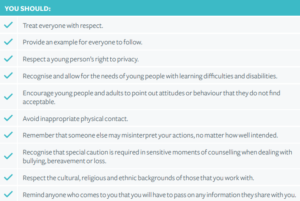
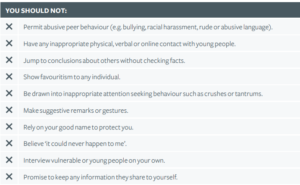
One particular training need that may be identified is safeguarding. The University of Southampton Safeguarding Children and Vulnerable Adults Code of Practice states that:
‘It is important to plan the work of an organisation that has contact with children, young people and vulnerable adults in such a way as to minimise situations in which abuse may occur. Therefore at the University of Southampton all staff that have regular one-to-one contact with children, young people or vulnerable adults should adhere to the following code of conduct to ensure safety both for themselves and the young person.’
In brief, it is the university policy that 1) no university member of staff or student should be alone with a group of children or vulnerable adults unless they have recent Enhanced DBS clearance and 2) it is advised that university staff and students should NEVER be alone with a single child or vulnerable adult, even if they have had recent DBS clearance. The University of Southampton ‘code of conduct’ referred to can be viewed in full at: www.southampton.ac.uk/hr/services/safeguarding-children/index.page
Below is a user-friendly guide to Safeguarding put together by the LifeLab team.
If a child or young person discloses to you that they have been or are being abused by someone or you suspect a child or young person is being abused or neglected:
• Record and date any facts which support your suspicions.
• Inform the Designated Senior Person (DSP) for child protection. If this occurs during interaction with school pupils then a member of school staff will need to be informed immediately.
• Allow the child or young person to speak without interruption, accepting what is said, but do not ask probing or leading questions. Do not attempt to investigate yourself.
• Alleviate feelings of guilt and isolation, without passing judgement.
• Advise the child or young person that you will try to offer support but must pass on the information.
• Continue to record any dates or facts as you know them.
If you receive an allegation about a member of staff or yourself:
• Inform your Designated Senior Person (DSP) for child protection immediately.
• Record and date the facts.
• Try to ensure no one is placed in a position which could cause further compromise.
Please note: It will not be necessary for every member of staff involved to obtain a DBS check as long as they will not be left alone with any pupils or vulnerable adults. However, some schools require any adult entering the school to have one and if working with children will be a regular part of your work you may want to arrange one (see the Glossary entry for DBS and section 8.5 Resources for more information). For more information, you can request a LifeLab pocket guide at www.soton.ac.uk/lifelab
Some more safeguarding tips..